
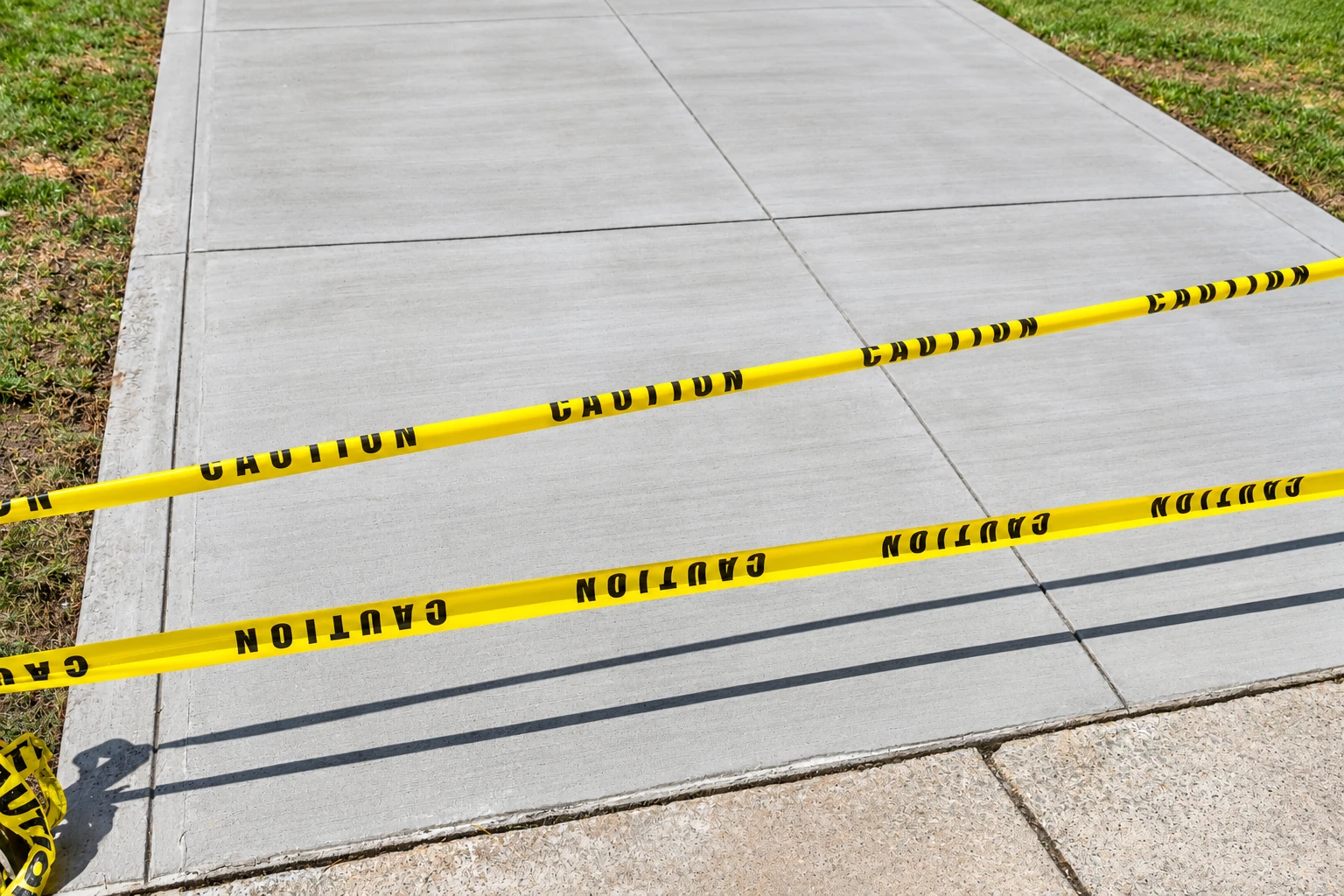
Concrete sidewalk building in Pomona CA - a walk on solid ground that grips when wet
Cracked, lifted or slick walk out front? We dig it out, pack the base and pour a textured walk that sits flat and drains.
- Fully licensed and insured.
- Free quotes on site.
- We reply within 1 business day.
What does it take to build a new sidewalk in Pomona?
Concrete sidewalk building in Pomona means taking out the topsoil, packing the ground underneath, then forming, pouring and finishing a flat concrete walk. J&K Pomona Concrete Contractors builds them for homes here and in the cities around it.
Most people call when the old walk has started catching toes, holding water or breaking up, or when there's only dirt or lawn where a walk should be. What moves the price is how much walk you need, whether there's an old one to break out, roots in the way, a driveway crossing that needs a heavier section, and the finish you pick. The schedule turns on the weather, the cure and a city permit if the walk runs along the street. I put your figure in a written estimate once I've seen the ground.
How do you know your sidewalk needs replacing?
Slabs lifting near a tree
When one slab rides up above the next one near a tree, roots are usually pushing it from below, and they keep growing. Grinding the lip down buys a little time, but a fix that holds deals with the roots and the ground, and the longer it waits the more slabs it takes with it.
Sunken slabs and trip edges
A slab that dropped below its neighbor usually means the ground under it washed out or the fill was never packed, and the step it leaves catches toes, especially at night. It only gets lower while water keeps finding the soft spot.
Water sitting on the walk
Puddles that hang around after the sprinklers shut off, or a walk that sheds water toward the house, mean nobody checked where the water runs. Standing water softens the ground under the slab and leaves a slick, stained surface, and it's often how sinking starts.
How we handle concrete sidewalk building
I start by walking the route with you, and if there's a tree near the walk, we work out where the walk runs and how the base gets built before anyone talks about a stronger mix, because around roots the route and the base usually matter more. We dig out the topsoil and pack the fill underneath, the subgrade, which is just the ground the slab sits on, so the walk doesn't settle with loose dirt. Where it crosses a utility line or meets the driveway, we make sure that ground gives the slab even support, and any spot where a car crosses gets extra attention, usually a thicker section with rebar, the steel inside that keeps a cracked slab from pulling apart. We set the forms so the walk falls away from the house, pour early so the top doesn't bake weak in the afternoon heat, and give it a broom finish, a light ridged texture that grips under wet shoes. Then we cut control joints, shallow grooves that give the concrete a straight place to crack instead of a random one, and start curing right away, which means keeping the slab damp and off-limits while it gains strength. If the budget gets tight, I'll cut a fancy edge before I cut the base, since nobody sees the base on day one and everybody sees it later.
A new walk often comes up when other concrete is due too. If the garage slab is tired, it's worth pricing garage floor concrete at the same time so the base work and pour days get planned together. If you want the walk to match a patio or carry color or a pattern, that's decorative concrete, and we still keep the surface textured, because a smooth troweled top can get slick when it's wet.
Replace on the same line
This suits a walk that cracked or sank because the ground under it was poor and no roots are in the way. We break out the old walk, rebuild the base and pour on the same route, which keeps the job simple.
Reroute around a tree
This suits a walk a tree has already lifted, where pouring back in the same spot means fighting the same roots. We move the line or rework the base so the new walk has a better shot at staying flat.
Get a written estimate for your new sidewalk
We reply within one business day to set a time, and I come out to look at the walk myself. The estimate is free, done on site and written down, and there's no pressure to book.
(909) 729-4086Concrete sidewalk building in Pomona and the city's permit
A walk along the street usually sits in the public right-of-way, the public land along the road that the city controls. In Pomona, the city's Land Development group issues every permit for work in that strip, and any work there needs one. The city lists Encroachment, Dry Utility and Transportation applications, so we sort out which one fits your walk, then pull the permit and handle the paperwork with the city.
A lot of the walks we replace here were lifted by trees, crossed by a driveway that's carried cars for decades, or kept wet by sprinklers, so we plan for all three on every job. We see the same thing on jobs in Claremont and La Verne.
What happens after you call about a sidewalk in Pomona?
Call or send us the details
Call (909) 729-4086 or use the form, and we get back to you to set a time for me to come out. Evenings and weekends work too.
I look at the ground
I check the route, the trees, the slope and any driveway crossing, measure, and ask how you use the walk. Then you get a written estimate that shows what the job includes, so you're not guessing what you're paying for.
We permit, pour and walk it
If the walk sits in the city's right-of-way, we pull the permit first, and the city's permit office is open Monday to Thursday, 7:30 am to 6:00 pm, so that paperwork moves on those days. Then my crew forms, pours and finishes while I check the work, and we walk the finished sidewalk with you before we pack up.
Frequently asked questions
Do I need a city permit for a sidewalk along the street in Pomona?
Yes, any work in Pomona's public right-of-way needs a city permit, and a walk along the street usually sits in it. We pull it and deal with the city for you, so it's one less thing on your list.
How much does a concrete sidewalk cost in Pomona?
Concrete sidewalk in the Los Angeles area usually costs about $5.50 to $11 per square foot, and that's the going rate around here, not our quote. Where yours lands depends on breaking out an old walk, working around roots and building a heavier section where a car crosses. My written estimate gives you the number for your walk.
Will tree roots crack my new sidewalk?
They can, because tree roots and expansive soil can move a walk over many years. Where the walk runs and how the ground under it is built usually matter more than a stronger mix, so that's where our planning goes. Nobody can promise what a tree will do, but a good route and base give the walk its best odds.
Does my contractor need a California license to build a sidewalk?
In most cases, yes. California requires a state license when a job needs a building permit, uses extra workers, or costs $1,000 or more in labor and materials, and even smaller work needs one if it needs a permit of any kind. The state licensing board's C-8 concrete license is the one that covers flat concrete work like sidewalks.
How long does a new concrete sidewalk take to cure before I can walk on it?
Curing starts right after we finish the surface, and you keep foot traffic off for the first stretch while the concrete gains strength. Cars stay off a driveway crossing longer than people stay off the walk, and I give you the dates for both on pour day, since the weather changes them.
What is the best way to maintain a concrete sidewalk?
Watch the sealant in the joints between slabs, because it can wear out and need replacing from time to time. Aim sprinklers off the walk where you can, and call when a slab starts to lift so the cause gets fixed, not just the edge.
Pomona, CA
Get your new sidewalk measured and priced
Tell us roughly how long the walk is, whether it runs along the street and whether a driveway or trees sit nearby, and I'll know what to look for before I get there.